Artificial Intelligence in Retirement Funds
Understand why artificial intelligence is a governance and fiduciary matter for retirement fund boards, identify where AI already appears in the fund ecosystem, and locate the South African labour, inequality and energy context that changes the risk-reward calculation.
Key concepts
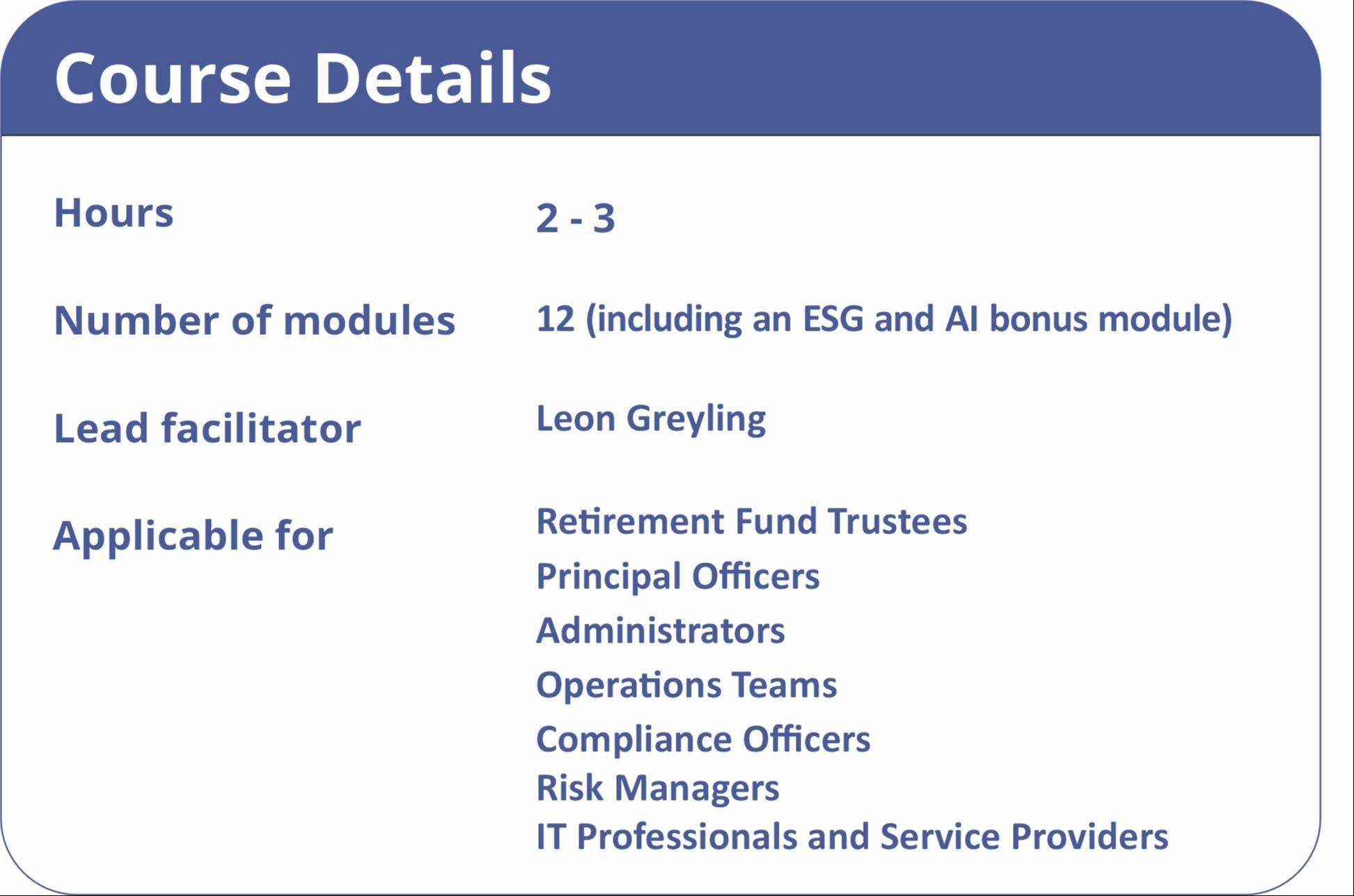
Target Audience: Retirement fund trustees, principal officers, administrators, operations teams, compliance officers, risk managers, IT professionals and service providers.
Duration: Approximately 2 - 3 hours, self-paced.
Learning Objectives:
-
- Understand AI as a governance matter and its connection to fiduciary responsibilities and member outcomes.
- Apply practical oversight principles through accountability, risk classification, AI policies and human review.
- Recognise ethical and data risks, including bias, privacy, transparency and unreliable outputs.
- Ask informed questions of providers about AI in administration, investments and member engagement.
- Explore legal and ESG considerations, including POPIA, Joint Standard 2 and South African labour and energy challenges.
Course Structure:
The course is divided into 12 including an ESG and AI bonus module, each with exercises, and a 10-question multiple-choice assessment. Supporting materials include a document, the Joint Standard 2, diagrams, video recordings, and external video links.
Syllabus
Artificial Intelligence in Retirement Funds | 12 modules | 3 hours
Modules 1 - 12
What you earn
Course fees
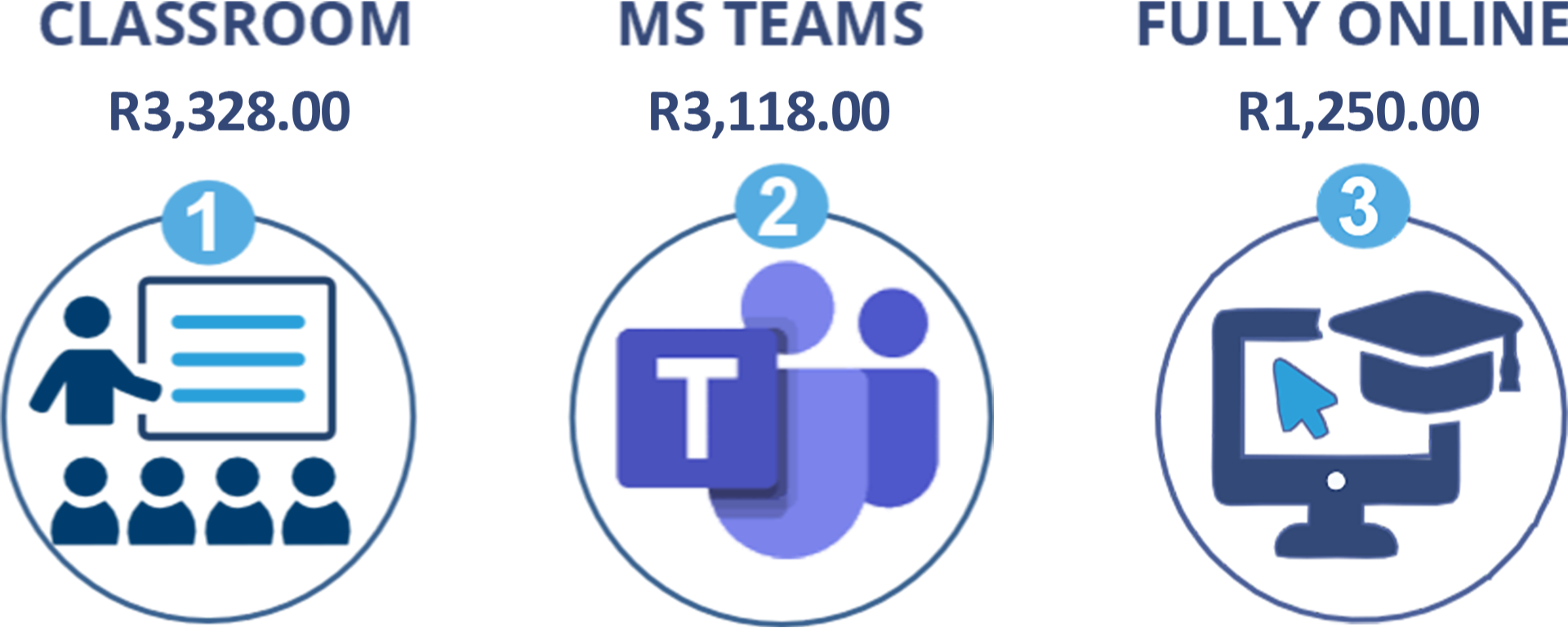
or
All costs are per learner and exclusive of VAT. Bulk discounts are available for groups of 5 or more.
This course equips retirement fund boards of trustees to responsibly oversee artificial intelligence by helping them thoroughly assess its benefits, risks, and overall impact on member outcomes. By providing practical guidance on governance, ethics, data protection, and provider oversight, it prepares boards to embrace innovation while safeguarding members’ long-term interests. Ultimately, the training reinforces the essential role of human judgment, clear accountability, and informed challenge when evaluating AI-assisted decisions.
Testimonials